
Skip to content
Mgr. Kateřina Prokopová explaining to a client how the pelvic floor works on a pelvis model

Pankrác Clinic, Prague 4

Gynaecological physiotherapygentle and unhurried

We help you understand your body and your pelvic floor — when you have problems, when trying to conceive, during pregnancy, after giving birth or as prevention. Every examination is tailored to your health, needs and comfort.

4.7 out of 5 on Google

50–60 min

for the first visit: consultation, examination and first therapy

Discreet

intimate examination only with your consent, never compulsory

No referral

book directly, without a gynaecologist’s recommendation

Metro C

right by the Pankrác station exit, Gemini A building

What is gynaecological physiotherapy?

Gynaecological physiotherapy — also called urogynaecological or pelvic floor physiotherapy — focuses on preventing and treating functional problems related to the pelvic floor, the pelvis and other parts of the musculoskeletal system.

The pelvic floor is a group of muscles and other structures that support the pelvic organs and play a role in continence, sexual function and the deep stabilising system. Its healthy function is not just about strength: it matters just as much to be able to consciously activate the muscles, relax them and coordinate them with breathing and movement.

What gynaecological physiotherapy can help with

Some women come with a specific problem, others as prevention. Gynaecological physiotherapy is not just about strengthening: we also work with posture, breathing, pelvic mobility, muscle tension and scars after childbirth or surgery.

Pelvic floor, bladder and bowel

  • Urinary or faecal incontinence

    Difficulty holding urine or stool, which may be related to pelvic floor function.

  • Pelvic organ prolapse

    Physiotherapy can be part of conservative care, depending on the specific findings.

  • Pelvic pain and pressure

    Including long-term problems related to muscle tension.

  • Chronic constipation

    Where impaired coordination or function of the pelvic floor muscles plays a role.
Pain and intimacy

  • Painful periods

    Especially where increased muscle tension or functional problems of the musculoskeletal system may be involved.

  • Pain during intercourse

    For example with increased pelvic floor muscle tension or vaginismus.

  • Endometriosis

    As supportive care for related functional and movement problems.

Pregnancy, birth and surgery

  • Pregnancy and preparing for birth

    Working with breathing, movement, the pelvic floor and changes in the musculoskeletal system.

  • Postnatal physiotherapy

    Checking the pelvic floor, diastasis and scars, and a gradual return to exercise.

  • After gynaecological surgery

    Supporting the recovery of musculoskeletal function with well-guided rehabilitation.

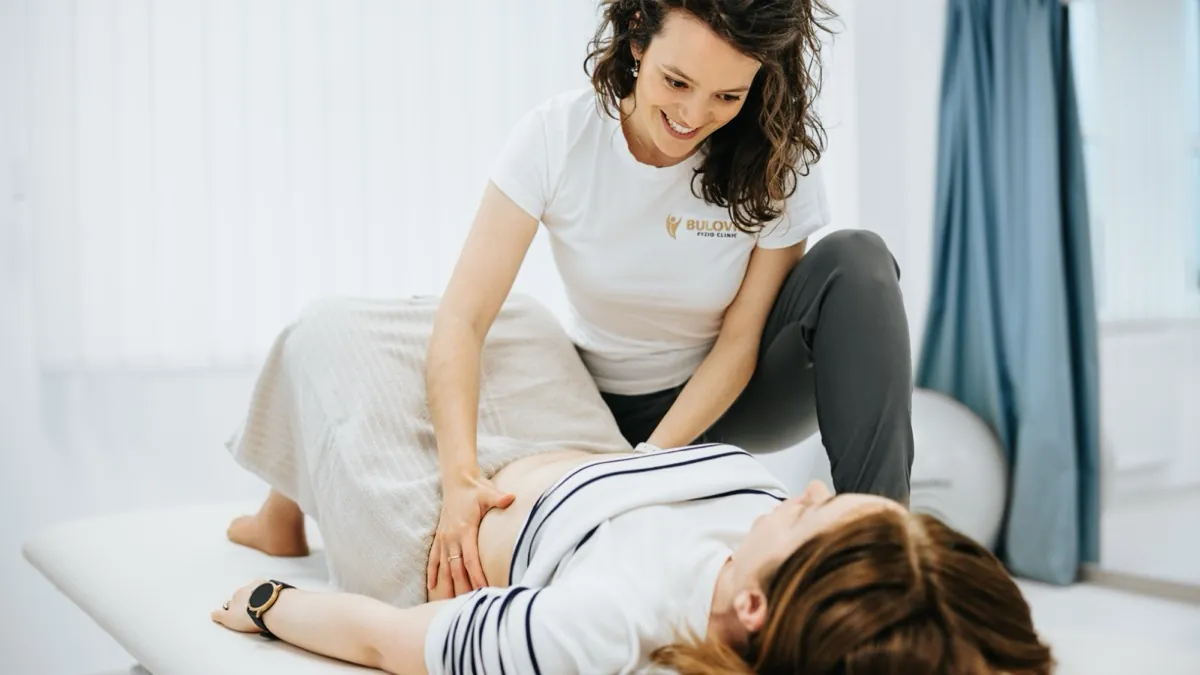
The physiotherapist smiling while treating a client’s abdomen and pelvis

Fertility and trying to conceive

When pregnancy doesn’t happen

Infertility and a long wait for a baby can be very hard for a woman and a couple. Gynaecological physiotherapy can be a complementary part of care — when preparing for pregnancy, while trying to conceive and when preparing for assisted reproduction.

  • Pelvis, pelvic floor and breathing

    We work with pelvic floor tension and coordination, pelvic position and mobility, breathing and scars.

  • Endometriosis and PCOS

    Supportive care for gynaecological and hormonal conditions such as endometriosis or polycystic ovary syndrome.

  • Assisted reproduction

    Complementary care when preparing for IVF and other assisted reproduction methods.

Book an initial examination

From Google reviews

„Top marks for Mgr. Kateřina Prokopová. After two years of trying unsuccessfully to conceive (and with a diagnosis of endometriosis), I booked gynaecological physiotherapy with her, and after the third session and one release of the coccyx using the Ludmila Mojžíšová method, I got pregnant. I am now 30 weeks pregnant, still in her care, and I feel wonderful. She is gentle, sensitive and considerate, explains things brilliantly and guides you…“
a client of gynaecological physiotherapy (translated from Czech)

4.7out of 5

18 Google reviews of our physiotherapy

Read the reviews on Google

Physiotherapy does not replace the care of a gynaecologist or a fertility centre and cannot guarantee pregnancy on its own. We therefore always tailor our approach to your health and your medical care.

How your first visit works

It takes about 50 to 60 minutes and is always tailored to you. You will know about every step in advance — and there is always room for your questions.

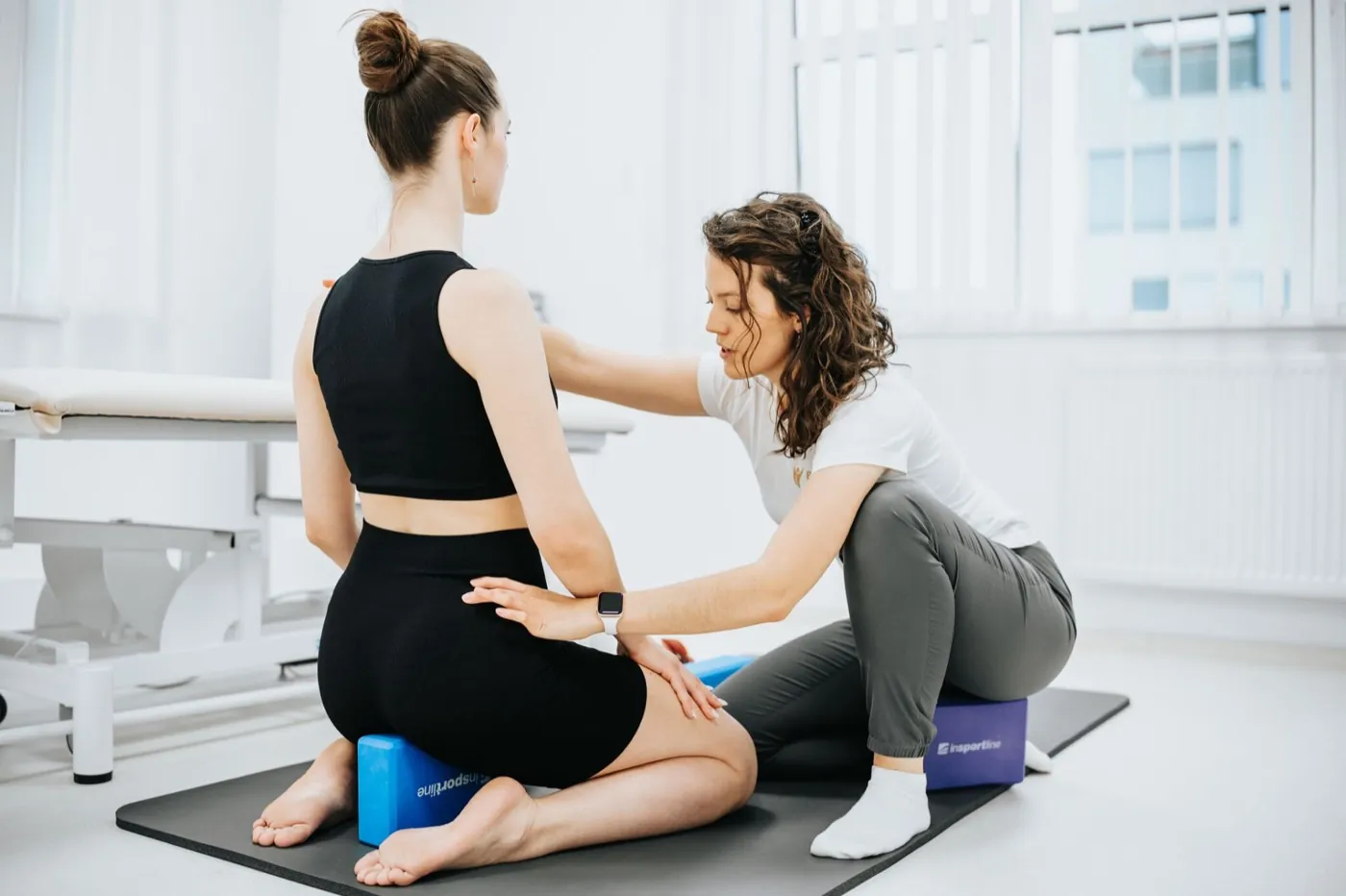
The physiotherapist correcting a client’s pelvic position during a mat exercise
  1. 01

    Initial consultation

    The physiotherapist will ask about your problems, how long they have lasted and what you expect from therapy. Some questions are personal, but they help her understand the links between the pelvic floor, movement and your symptoms. The conversation is discreet.

    • menstrual cycle
    • pregnancies and births
    • past surgery
    • bladder and bowel habits
    • intimate function
    • exercise habits
  2. 02

    Musculoskeletal examination

    By looking and touching, she assesses your posture, pelvic position, muscle tension and breathing. The examination is usually done in underwear — if that feels uncomfortable, loose shorts and a top are fine.

  3. 03

    Pelvic floor examination, only when appropriate

    Depending on the findings, she may recommend a specialised examination per vaginam or per rectum. It shows the sensitivity, tension, strength and coordination of the muscles and sometimes allows targeted treatment straight away. She will explain beforehand why she recommends it and how it works.

  4. 04

    First therapy and a home-care plan

    Based on her findings, she starts therapy — soft-tissue treatment, mobilisation and manual techniques, breathing work and practising how to activate and relax the pelvic floor correctly. You leave knowing how to work with your pelvic floor at home.

You decide about the intimate examination

An intimate examination is not an automatic or compulsory part of the visit. It is only carried out when it is professionally appropriate and always with your consent. You can ask about anything, decline the examination or ask to stop it — the physiotherapist will then discuss another approach with you.

Mgr. Kateřina Prokopová, gynaecological physiotherapist

Your gynaecological physiotherapist

Mgr. Kateřina Prokopová

In her practice, Mgr. Kateřina Prokopová helps women understand their own bodies and learn to work with the pelvic floor so that it supports them in everyday life, movement and sport.

In her therapies she combines manual techniques, including external and internal pelvic floor treatment (per vaginam / per rectum), with targeted exercises inspired by developmental kinesiology, the Mojžíšová method, yoga and breathing techniques.

She enjoys creating an environment where women feel safe, can openly share their needs and take an active part in the therapy.

  • Manual techniques including external and internal pelvic floor treatment
  • Exercises inspired by developmental kinesiology
  • The L. Mojžíšová method
  • Yoga and breathing techniques

Please note: therapy with Mgr. Prokopová is conducted in Czech.

Book with Mgr. Prokopová

Price and booking

Prices

Initial examination and therapy60 min
1 600 Kč
Follow-up therapy50 min
1 300 Kč

The physiotherapist will suggest the length and frequency of further sessions after the initial examination. Care is provided privately — it is not covered by health insurance and an FT/K referral voucher cannot be used.

Book online in a few minutes

The booking system is in Czech — choose these items:

  1. 1

    Choose the clinic Fyzioterapie – Klinika PankrácPhysiotherapy – Pankrác Clinic

  2. 2

    Select the service Vstupní vyšetření – gynekologická fyzioterapieInitial examination – gynaecological physiotherapy

  3. 3

    Pick a time and briefly note what you would like to address

Before you come

Your first visit needs no complicated preparation — just a few small things.

What to bring

If you have medical records related to your problems, bring them along:

  • A report from your gynaecologist
  • Medical reports and test results
  • A physiotherapy referral, if you have one
  • Information about surgery or complications

No reports? That’s fine — you can book without them.

When to arrive

10 minbefore your appointment

Reception will take care of the paperwork, and then you can relax in the waiting room until the physiotherapist comes for you.

What to wear

Comfortable clothes

For the initial examination you can keep loose shorts and a top on — the physiotherapist always respects your privacy and comfort.

Questions about gynaecological physiotherapy

Didn’t find your answer? Write or call us — we’re happy to help.

No. An intimate examination is not an automatic part of every visit. The physiotherapist may recommend it based on the results of the initial examination, but she will always explain its purpose and procedure beforehand. It is only carried out with your consent and you can stop it at any time.

The examination is always based on your health and how you feel on the day. With increased sensitivity or tension, some parts may be uncomfortable, but they can be adapted. The physiotherapist will talk you through each step beforehand and keep communicating during the examination. If you have any worries, mention them right at the start.

No. You can book directly, without a doctor’s referral. If you do have a report from a gynaecologist or another specialist, we recommend bringing it along.

About 50 to 60 minutes. It includes an initial consultation, a physiotherapy examination and, depending on your needs, the first part of therapy and home-care advice.

The number of sessions is individual — it depends on how long your problems have lasted, the examination results and how you respond to therapy. The physiotherapist will suggest the next steps and frequency after the initial examination. Follow-up sessions last about 30 or 50 minutes.

Yes. You can also book as prevention, for example before a planned pregnancy, when preparing for birth or for a pelvic floor check after childbirth.

It can be a complementary part of care — when preparing for pregnancy, while trying to conceive and when preparing for assisted reproduction. It does not, however, replace examination and treatment by a gynaecologist or a fertility centre, and on its own it cannot guarantee that fertility problems will be resolved.

Physiotherapy can be a suitable part of care if pelvic floor or musculoskeletal function plays a role in your problems. It is always important, however, to consider the cause and, where appropriate, add a gynaecological or other medical examination.

No. We provide physiotherapy privately with direct payment — we have no contracts with health insurers and an FT/K referral voucher cannot be used.

Write directly to our gynaecological physiotherapist, Mgr. Kateřina Prokopová — she will be happy to recommend the right next step: provozfyzio@bulovkafc.com

Gynaecological physiotherapy does not replace a gynaecological examination, diagnosis or treatment, nor the care of a midwife, a doula or an antenatal class. If new, severe or unusual symptoms appear — such as severe pain, unusual bleeding or other acute symptoms — please see a doctor first.

The whole visit is described in detail in our article What does the first visit involve and what can you expect.

You don’t need to have all the answers beforehand

The initial examination is there precisely so that you can talk your problems through with the physiotherapist, get an overview of your care options and leave with a recommendation for the next steps.

The Gemini A building in Pankrác, home of the clinic

Pankrác Clinic

Na Pankráci 1683/127, budova Gemini A, 140 00 Praha 4

  • Metro C → Pankrác station. The Gemini A building is right by the metro exit.
  • Bus 134, 188, 193 → Pankrác stop
  • Paid city parking applies nearby. The most convenient option is the Arkády Pankrác shopping centre car park — the first 2 hours are free. We have no reserved spaces for clients.
Directions in Google Maps

Part of Bulovka Premium Clinic

Three clinics. One standard of care.

Gynaecological physiotherapy in Pankrác is part of Bulovka Premium Clinic — three clinics in Prague offering dentistry, dental hygiene, physiotherapy and a general practitioner under one brand.

Privacy and cookies

We use cookies so the website works properly and, with your consent, to analyse traffic and improve our services. You can change your decision at any time. Privacy policy