What to expect from gynaecological physiotherapy and your first visit
Gynaecological physiotherapy is a specialised area of physiotherapy that focuses primarily on the function of the pelvic floor, the musculoskeletal system, and the relationship between the two. It can be beneficial for various pelvic health issues, during pregnancy, after childbirth, or as part of preventive care for women's health.
Although this area of care is discussed increasingly often, many women are unsure how gynaecological physiotherapy works, whether an intimate examination is part of the visit, or how to prepare for their first appointment.
At Bulovka Premium Clinic in Pankrác, we provide gynaecological physiotherapy with an emphasis on an individual, sensitive and discreet approach. Every examination is tailored to the client's health condition, needs and comfort.
In this article, we explain what to expect during your first visit, how the pelvic floor examination is conducted, and what therapy options are available.
What is gynaecological physiotherapy?
Gynaecological physiotherapy, also known as urogynaecological physiotherapy, focuses on the prevention and treatment of functional issues related to the pelvic floor, pelvis and other parts of the musculoskeletal system.
The pelvic floor is made up of a group of muscles and other structures that help support the pelvic organs, maintain continence, support sexual function, and work together with the deep stabilisation system.
Proper pelvic floor function depends not only on adequate muscle strength. Equally important is the ability to consciously activate and relax these muscles and coordinate their action with breathing and movement.
Gynaecological physiotherapy is therefore not only about strengthening the pelvic floor. Care may also involve working with posture, breathing patterns, pelvic mobility, muscle tension, or scars following childbirth and surgery.
What conditions can be addressed with gynaecological physiotherapy?
Pelvic floor physiotherapy can be part of care for a wide range of issues. Some women come with a specific problem, while others seek physiotherapy preventively, for example in connection with planned pregnancy or after childbirth.
Most common reasons for a visit
Painful menstruation – especially where increased muscle tension or functional musculoskeletal disorders may be contributing factors.
Pain during intercourse – for example due to increased tension of the pelvic floor muscles or vaginismus.
Urinary or faecal incontinence – difficulties controlling urine or stool, which may be related to pelvic floor function.
Pelvic pain and pressure – including long-term issues related to muscle tension.
Chronic constipation – where impaired coordination or function of the pelvic floor muscles contributes to the problem.
Pelvic organ prolapse – physiotherapy may form part of conservative care depending on the specific findings.
Endometriosis – as supportive care for related functional and musculoskeletal issues.
Pregnancy and preparation for childbirth – working with breathing, movement, the pelvic floor and changes in the musculoskeletal system.
Postpartum physiotherapy – assessment of the pelvic floor, diastasis, scars, and gradual return to movement.
Recovery after gynaecological surgery – supporting the restoration of musculoskeletal function through appropriately guided rehabilitation.
Gynaecological physiotherapy can also serve as a complementary form of care for women with hormonal or gynaecological conditions, such as polycystic ovary syndrome (PCOS), or when preparing for pregnancy and assisted reproduction.
It is important to emphasise, however, that physiotherapy does not replace a gynaecological examination, diagnosis, or treatment of the underlying condition. In the case of hormonal disorders or fertility issues, it cannot on its own guarantee their resolution.
How to prepare for your first gynaecological physiotherapy appointment
No demanding preparation is required for your first visit. However, we recommend following a few simple steps that will make the initial examination easier and help the physiotherapist gather the information she needs.
What to mention when booking online?
When booking your appointment, it is helpful to briefly note in the comments what issues you would like to address during physiotherapy.
This may include, for example, pelvic floor problems, pelvic pain, physiotherapy during pregnancy, or a postpartum check-up.
More detailed information about your health will then be discussed in person during the initial consultation with the physiotherapist.
What documents should you bring?
If you have any medical documentation relating to your condition, we recommend bringing it with you.
Useful documents may include:
A report from your gynaecologist.
Medical reports related to your current condition.
Results of previous examinations.
A referral for physiotherapy, if issued by a doctor.
Information about past surgeries or significant health complications.
If you do not have any medical reports, this is not an obstacle to your visit. You can book gynaecological physiotherapy at Bulovka Premium Clinic without a doctor's referral as well.
When should you arrive at the clinic?
For your first visit, we recommend arriving approximately 10 minutes before your scheduled appointment time.
Our reception team will take care of the necessary administrative matters with you. You can then wait comfortably in the waiting room until the physiotherapist comes to collect you.
What happens during the first gynaecological physiotherapy appointment?
The first gynaecological physiotherapy appointment at Bulovka Premium Clinic takes approximately 50 to 60 minutes.
During this time, the session includes an initial consultation, a physiotherapy examination, and, depending on the specific findings, the first part of the therapy. The visit also includes an explanation of the recommended approach and, where appropriate, a demonstration of suitable exercises for home care.
The course of each session is always individual. It is therefore not possible to determine in advance exactly how much time will be devoted to each part of the visit.
1. Initial consultation and medical history
The first meeting begins with a conversation with the physiotherapist. Its purpose is to gain an overview of your health, your current difficulties, and your expectations for the therapy.
As part of the gynaecological history, the physiotherapist may ask about:
The nature and duration of your current difficulties.
Your menstrual cycle.
Any previous pregnancies and births.
Gynaecological or other surgeries.
Any issues with urination or bowel movements.
Intimate function and any related difficulties.
Your overall health and physical activity habits.
Some questions may be personal, but they are important for understanding the connections between the pelvic floor, the musculoskeletal system, and your specific difficulties.
The conversation is conducted with discretion, with the aim of creating a safe environment in which you can speak openly about your concerns.
2. Physiotherapy examination of the musculoskeletal system
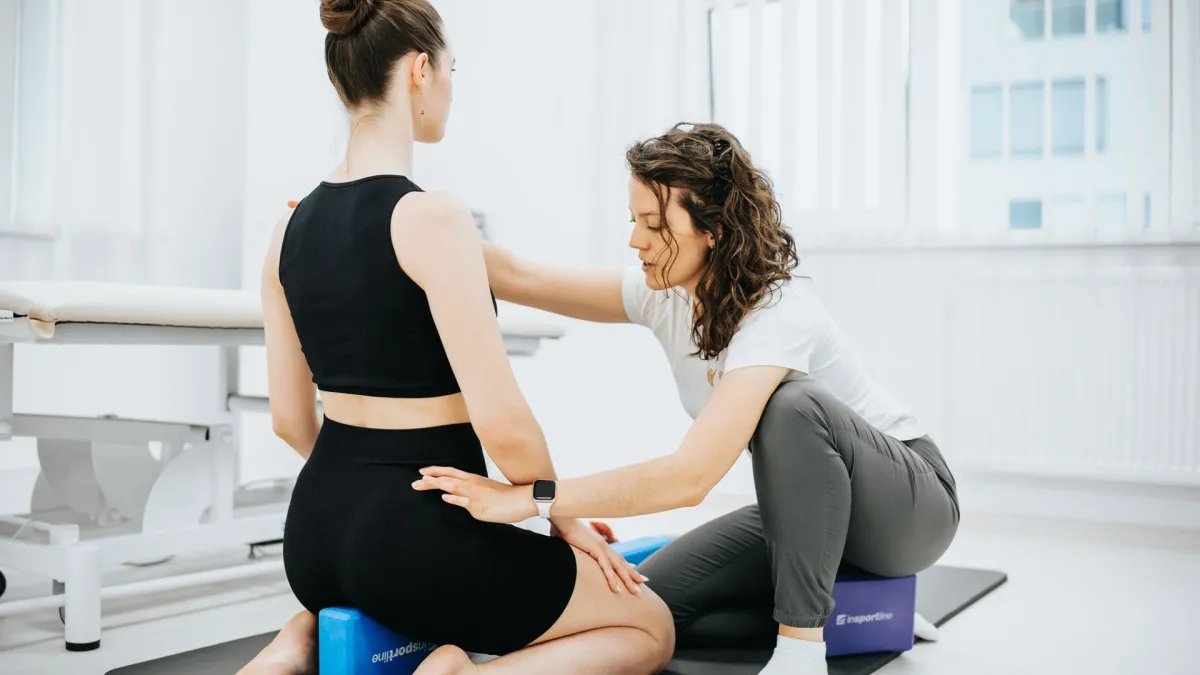
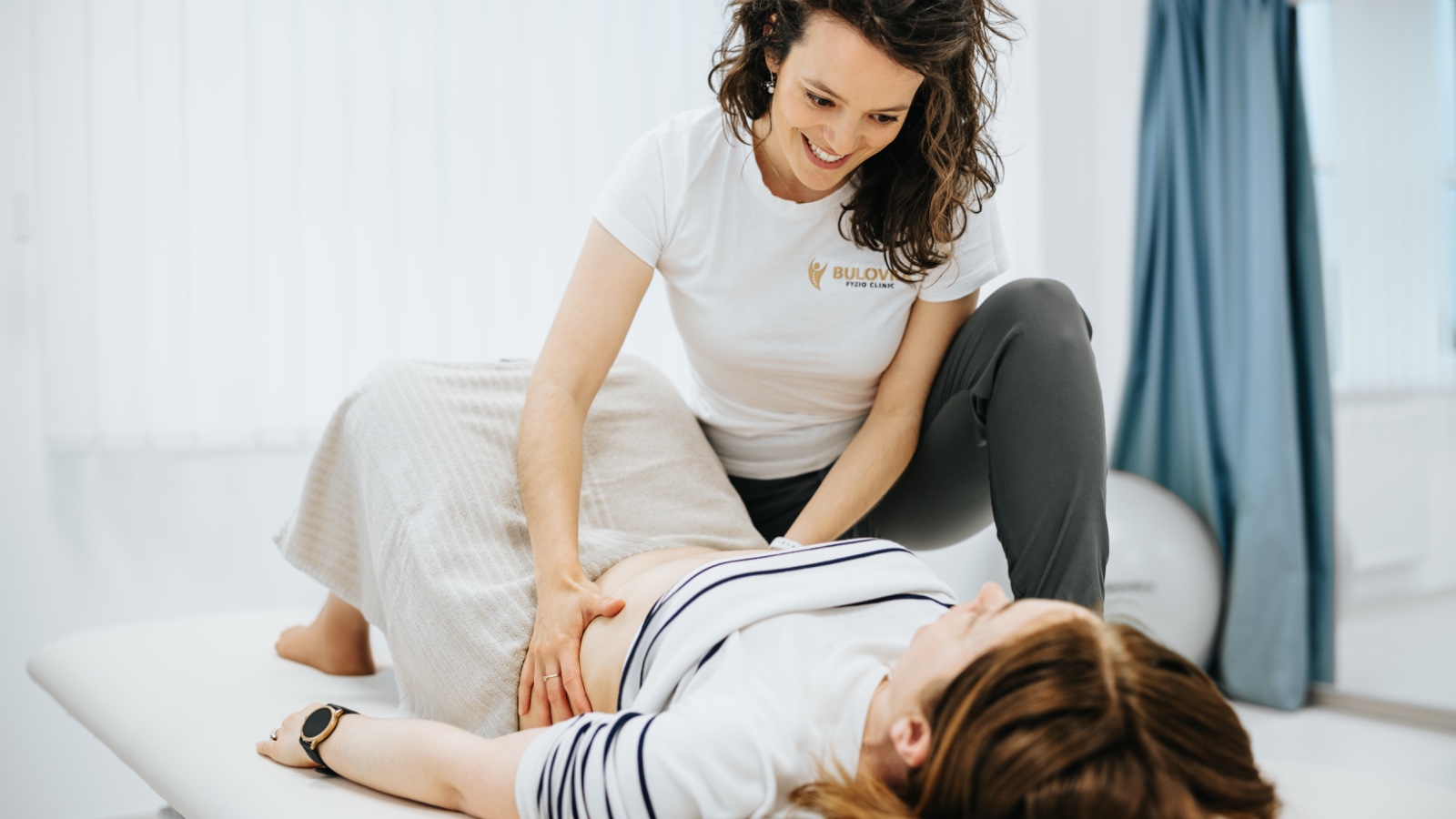
After the initial conversation, a physiotherapy examination follows, during which the therapist assesses the musculoskeletal system through observation and palpation.
This may include an evaluation of posture, pelvic alignment, muscle tension, breathing patterns, and other functional relationships.
You may be asked to undress down to your underwear for the examination.
If undressing makes you uncomfortable, you can discuss an alternative arrangement with the physiotherapist. For the initial part of the examination, it is possible to keep, for example, loose shorts and a tank top on.
Respecting the client's privacy and personal comfort is an important part of the entire examination.
3. Pelvic floor examination
Based on the results of the initial consultation and physiotherapy examination, the therapist may also recommend a specialised pelvic floor examination.
Its purpose is to determine how the pelvic floor muscles are functioning, whether the client can properly activate and relax them, and whether there is increased tension or any other functional limitation in the area.
A comprehensive examination may also include:
Per vaginam examination – examination through the vagina.
Per rectum examination – examination through the rectum.
These procedures allow the physiotherapist to assess the sensitivity, muscle tension, strength, and coordination of the pelvic floor in more detail. In some cases, they may also allow for targeted local treatment.
An intimate examination is not an automatic or mandatory part of every visit.
It is only performed when clinically appropriate based on your difficulties and the results of the previous examination, and always with the client's consent.
The physiotherapist will explain in advance why the examination is recommended, how it will be carried out, and what information it may provide. You are welcome to ask questions, decline the examination, or request that it be stopped at any time.
If you do not wish to undergo an intimate examination, the therapist will discuss other possible options with you.
4. First therapy session and home care recommendations
Based on the information gathered, the physiotherapist will recommend an individual rehabilitation plan.
Depending on the nature of your difficulties, therapy may include, for example:
Soft tissue treatment.
Mobilisation and manual techniques.
Work with breathing and posture.
Training in proper activation and relaxation of the pelvic floor.
Individually selected therapeutic exercises.
Recommendations for suitable aids.
Education on everyday movement habits.
The first visit usually also includes an explanation of how you can work with your pelvic floor at home and which approaches are suitable given your current condition.
Each therapy is tailored to the client's specific needs. There is no single universal set of exercises suitable for all women.
Is a pelvic floor examination painful?
Concerns about an uncomfortable or painful examination are among the reasons why some women postpone visiting gynaecological physiotherapy.
However, a physiotherapy examination is always based on the individual health condition and current possibilities of the client. Some parts of the examination may be unpleasant in cases of increased sensitivity or muscle tension, but the procedure can be adapted accordingly.
The physiotherapist will discuss each step with you in advance and will communicate with you throughout the examination.
If you have any concerns about a particular part of the examination, it is advisable to mention them during the initial consultation.
The goal is not to perform every available examination method at all costs, but to obtain the necessary information while respecting your comfort and consent.
How does gynaecological physiotherapy continue after the first visit?
Based on the initial examination, the physiotherapist will propose a further course of action, the recommended frequency of visits, and any home exercises if needed.
Follow-up therapies may last approximately 30 or 50 minutes, depending on the nature of the issue and the chosen approach.
The number of visits is individual. It depends, for example, on how long the difficulties have persisted, the examination results, the client's health condition, and her response to therapy.
In some cases, the physiotherapist may also recommend a further specialist examination or consultation with a gynaecologist or other physician.
Gynaecological physiotherapy does not replace medical care
Although physiotherapy can be an important part of pelvic floor care, it does not replace gynaecological diagnostics and treatment.
Similarly, it does not replace the care of a midwife, a doula, or a prenatal course.
If new, significant, or unusual symptoms occur, such as severe pain, unusual bleeding, or other acute symptoms, it is important to seek appropriate medical care first.
Physiotherapy and medical care can complement each other appropriately, depending on the client's specific health condition.
Gynaecological physiotherapy at Bulovka Premium Clinic in Pankrác
At Bulovka Premium Clinic, we provide specialised gynaecological physiotherapy at our Pankrác, Prague 4 branch.
Care in this area is provided by Mgr. Kateřina Prokopová, who specialises in urogynaecological physiotherapy and individual work with clients.
Why book an appointment at our branch?
Individual approach
We tailor every examination and subsequent therapy to the client's health condition and needs.Discreet and sensitive environment
We respect our clients' privacy and explain each step of the examination in advance.Ample time for the first visit
The initial examination takes approximately 50 to 60 minutes and includes a consultation, examination, and recommendations for further steps.No medical referral required
You can book a gynaecological physiotherapy appointment directly, without a referral from a general practitioner or gynaecologist.Modern facility in Pankrác
Our clinic is located in the Gemini A building in Prague 4, near the Pankrác metro station.
We provide physiotherapy care on a private basis. We do not have contracts with health insurance companies, and individual therapies are paid for directly by clients.
Frequently Asked Questions About Gynaecological Physiotherapy
How long does the first gynaecological physiotherapy visit take?
The first visit at Bulovka Premium Clinic takes approximately 50 to 60 minutes. It includes an initial consultation, a physiotherapy examination, and, depending on individual needs, the first part of therapy and recommendations for home care.
Do I have to undergo an intimate examination during the first visit?
No. An intimate examination is not automatically part of every visit. The physiotherapist may recommend it based on the results of the initial assessment, but she will always explain its purpose and course beforehand. It is performed only with your consent.
What should I bring to my first gynaecological physiotherapy session?
We recommend wearing comfortable clothing and bringing any medical reports related to your difficulties. If you have a referral from a gynaecologist or another doctor, you are welcome to bring that as well.
Is gynaecological physiotherapy also suitable as a preventive measure?
Yes. You can also book physiotherapy as a preventive measure, for example in connection with a planned pregnancy, preparation for childbirth, or a check of pelvic floor function after delivery.
Does physiotherapy also help with painful periods or incontinence?
Physiotherapy can be a suitable part of care if pelvic floor or musculoskeletal function contributes to the difficulties. However, it is always important to consider the underlying cause and, if necessary, complement the treatment with a gynaecological or other medical examination.
Do I need a referral from a gynaecologist?
No. You can book an appointment for gynaecological physiotherapy at Bulovka Premium Clinic even without a doctor's referral. However, if you have a report from a gynaecologist or another specialist, we recommend bringing it with you.
Is gynaecological physiotherapy covered by health insurance?
Our clinic provides physiotherapy on a direct-payment basis. The service is not covered through contracts with health insurance companies.
Book Your Gynaecological Physiotherapy Appointment in Pankrác
If you are considering gynaecological physiotherapy but are not sure whether it is right for you, you don't need to have all the answers before your first visit.
The initial examination is designed precisely for this purpose — to discuss your difficulties together with the physiotherapist, gain an overview of your care options, and receive recommendations for next steps.
At Bulovka Premium Clinic in Pankrác, we provide urogynaecological physiotherapy with an emphasis on expertise, discretion, and an individual approach.