Shockwave Therapy: How It Works and When It Can Help
Heel pain, overloaded tendons, tennis elbow, or long-term shoulder issues can significantly limit everyday movement and sports activities. If problems persist, in addition to targeted exercise and other rehabilitation approaches, it may be worth considering device-assisted physiotherapy.
One option is shockwave therapy, which uses the mechanical energy of acoustic pulses to act on selected tissues of the musculoskeletal system. For some chronic tendon and tendon attachment issues, it may help relieve pain and support a return to everyday activities.
At Bulovka Premium Clinic in Pankrác, we offer both radial and focused shockwave therapy using Storz Medical technology. Treatments are performed by certified physiotherapists who assess the patient's health condition and the suitability of the chosen method before application.
In this article, we will explain how shockwave therapy works, the difference between radial and focused technology, what conditions it is used for, and what to expect during the treatment itself.
What Is Shockwave Therapy and How Does It Work?
Shockwave therapy is a non-invasive physical method that uses mechanical acoustic pulses to act on tissues of the musculoskeletal system.
In physiotherapy, it is used mainly for certain long-term painful conditions of tendons, tendon attachments, and other soft tissues.
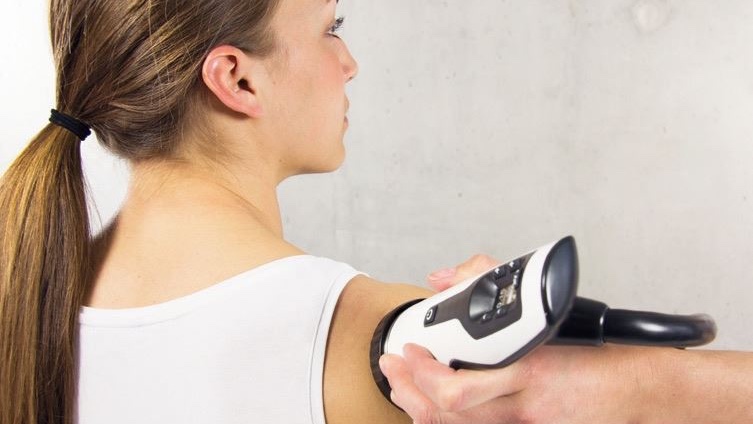
Mechanical energy is transmitted into the treated area through a special applicator. Its effect may influence biological processes related to how tissues respond to load and how pain is perceived.
Scientific studies examine, for example, the effect of shockwave therapy on cell signaling, blood circulation, metabolic processes, and mechanisms associated with tissue regeneration.
However, shockwave therapy is not a universal solution for all musculoskeletal pain. Results depend on the specific diagnosis, duration of the condition, chosen technology, and individual patient response.
For some conditions, it may be beneficial, while for others the evidence of effectiveness is limited or inconclusive. For this reason, a professional assessment before starting therapy is essential.
What Is the Difference Between Radial and Focused Shockwave Therapy?
Physiotherapy uses two main types of device-based treatment, which differ in how mechanical energy is generated and transmitted.
At Bulovka Premium Clinic in Pankrác, we offer both radial and focused Storz Medical shockwave therapy. Depending on the nature of the condition, the physiotherapist can recommend the appropriate type of treatment or a combination of both.
Radial Shockwave Therapy (RSWT)
Radial shockwave therapy uses mechanical pressure pulses that spread from the applicator into the surrounding tissues.
The highest intensity of the effect is usually near the surface, with the energy gradually dispersing as the distance increases.
Radial technology is used mainly for treating more superficially located soft tissues, for example in certain muscular issues and overloaded tendon attachments.
Depending on the individual findings, it may be part of care for:
Increased tension in selected muscle groups.
Myofascial trigger points.
Certain chronic tendon attachment issues.
Selected painful conditions of the feet and lower limbs.
Focused Shockwave Therapy (FSWT)
Focused shockwave therapy allows mechanical energy to be concentrated at a defined depth within the treated tissue.
This makes it suitable for certain conditions affecting deeper structures, such as tendon attachments.
Focused technology is also used for selected conditions associated with calcifications, particularly in the area of the shoulder's rotator cuff.
However, focused shockwave therapy is not automatically more effective than radial. Each technology has different physical properties, and the appropriate approach is chosen based on the specific diagnosis.
What conditions can shockwave therapy help with?
Shockwave therapy is most commonly used as part of conservative care for chronic conditions affecting tendons, their attachments, and certain other musculoskeletal structures.
1. Heel spur and plantar fasciopathy
Heel pain, which may occur, for example, during the first steps in the morning or after prolonged standing, is among the common foot complaints.
One of the possible causes is plantar fasciopathy, a painful condition related to overloading of the plantar fascia on the underside of the foot.
An X-ray sometimes also reveals a heel spur. However, this may not be the actual cause of the pain.
Shockwave therapy may be one of the conservative care options, especially if the condition persists despite standard measures.
It is advisable to combine it with, for example:
Targeted exercises for the foot and calf muscles.
Gradual adjustment of the load on the lower limbs.
Stretching tailored to the individual findings.
Assessment of suitable footwear or orthopedic insoles.
The effectiveness of shockwave therapy may vary among patients. Neither the elimination of pain nor its reduction after a specific number of sessions can be guaranteed in advance.
2. Tennis elbow and golfer's elbow
Tennis elbow and golfer's elbow refer to painful conditions of the tendon attachments around the elbow, which can develop due to repetitive work-related or sports-related strain.
Symptoms may occur when gripping objects, working on a computer, lifting, or during sports activities.
Shockwave therapy is sometimes used as a complementary method for certain chronic tendon attachment conditions.
However, clinical study results are mixed. For tennis elbow, shockwave therapy cannot therefore be considered a clearly more effective approach than other forms of conservative treatment.
Appropriately dosed exercise and adjustment of forearm loading remain an important part of rehabilitation.
3. Painful shoulder and calcification
Shoulder pain may be related to overloading of the rotator cuff tendons, limited mobility, or other changes in the shoulder joint area.
In some patients, so-called calcifications—calcium deposits—form within the tendons. This condition is referred to as calcific tendinopathy.
Focused shockwave therapy may be one of the conservative treatment options for selected patients. Some studies suggest it may help reduce symptoms and alter the size of calcifications.
However, complete removal of the calcifications or full restoration of shoulder mobility cannot be guaranteed. The suitability of the therapy is determined by a specialist based on examination results and the nature of the condition.
Furthermore, shockwave therapy may not provide the same benefit for shoulder pain without calcifications.
4. Achilles tendon pain
The Achilles tendon is subjected to considerable strain during walking, running, and jumping.
Long-term overloading can lead to a painful condition known as Achilles tendinopathy.
It may manifest, for example, as pain during running, stiffness after rest, or tenderness of the tendon under load.
Depending on the individual condition, shockwave therapy may be used as a complement to rehabilitation. However, targeted, gradually dosed tendon loading generally remains the primary approach.
Neither laser therapy nor shockwave therapy replaces properly guided exercise, and there is no guarantee that their application will prevent potential tendon injury.
5. Jumper's knee and other tendon attachment conditions
Jumper's knee, or patellar tendinopathy, often occurs in athletes who repeatedly run, jump, or perform explosive movements.
A typical symptom is pain in the tendon area below the kneecap, especially during sports activity.
For some long-term conditions, shockwave therapy may be used as a complementary method. However, evidence of its benefit is not conclusive for all types of patellar tendinopathy.
Physiotherapy therefore also focuses on muscle strength, movement coordination, gradual tendon loading, and appropriate training adjustments.
6. Myofascial trigger points and muscle tension
Myofascial trigger points are sensitive areas within muscles that may be associated with local or referred pain.
They can occur, for example, in the neck, shoulders, back, or buttocks.
Radial shockwave therapy is sometimes used as a complementary approach for certain muscular conditions and increased muscle tension.
However, results may vary, and it has not been proven that a single application reliably eliminates muscle spasms or the long-term causes of overload.
Physiotherapy may also include targeted exercise, manual techniques, and recommendations for appropriate movement habits.
What Does Shockwave Treatment Involve?
Shockwave treatment is a non-invasive method in which a physiotherapist applies mechanical impulses to a selected area of the body using a special applicator head.
At Bulovka Premium Clinic in Pankrác, the therapy itself is preceded by an assessment of the patient's health condition and the suitability of the method.
1. Initial Consultation and Examination
The physiotherapist first familiarises themselves with the nature of your difficulties, their duration, and any previous treatment.
If necessary, they will carry out a functional examination of the musculoskeletal system and assess whether shockwave therapy is an appropriate approach.
If you have a medical report, ultrasound results, or an MRI scan, it is advisable to bring them along.
2. Selecting the Appropriate Technology
Based on the examination, the physiotherapist will recommend radial or focused shockwave therapy, or a combination of both.
The choice depends on the type of difficulty, the location of the treated structure, its depth, and other individual circumstances.
3. The Application Itself
A contact gel is usually applied to the treated area to enable effective transmission of the mechanical impulses.
The physiotherapist then places the applicator on the selected spot and sets the treatment parameters.
During the application, you may feel repeated mechanical impulses, pressure, or discomfort. The intensity of these sensations depends on the treated area and the device settings.
The treatment may not be entirely painless. The physiotherapist continuously monitors the patient's tolerance and adjusts the application parameters as needed.
4. Recommendations After Therapy
After treatment, the treated area may be temporarily more sensitive. Mild redness, swelling, or minor bruising may sometimes occur.
The physiotherapist will recommend a suitable approach for the following days and any adjustment to physical activity.
For certain conditions, it may be advisable to continue with individual exercise or further rehabilitation.
How Many Shockwave Sessions Are Needed?
The number of sessions depends on the type of difficulty, its duration, the chosen technology, and the individual response to therapy.
For some tendon-related conditions, professional guidelines suggest a series of approximately three to five sessions spaced one to two weeks apart. However, this is not a universal scheme suitable for all patients.
Relief may not occur immediately after the first treatment. In some patients, changes appear gradually over the following weeks, while in others, the benefit of the therapy may not be significant.
Our clinic offers standalone 20-minute sessions of radial or focused shockwave therapy, their combination, as well as physiotherapy complemented by device-based treatment.
Details of individual services and their prices can be found in the current Bulovka Premium Clinic price list.
Is Shockwave Therapy Safe?
When properly indicated and professionally performed, shockwave therapy is a widely used non-invasive method. As with other medical procedures, however, it is important to assess possible risks and contraindications.
Common temporary side effects include discomfort during application, local redness, sensitivity, or minor bruising.
More serious complications are less common, but it is nevertheless essential to follow safety procedures and avoid using the method in unsuitable situations.
When May Shockwave Therapy Not Be Suitable?
Contraindications depend on the technology used, the energy intensity, and the area being treated.
Particular attention is required in cases such as:
Pregnancy – shockwave therapy must not be applied to an area where the foetus could be affected.
Cancerous disease in the treatment area – treatment in the area of a tumour is contraindicated.
Significant blood clotting disorders – particularly when using high-energy focused shockwave therapy.
Certain implanted medical devices – if located within the area affected by the shockwave.
Other risk structures and health conditions – depending on the type of device and the specific treatment area.
Before starting therapy, the physiotherapist therefore gathers important information about the patient's health condition and, if necessary, recommends further specialist examination.
Shockwave therapy is not automatically suitable for every acute pain. If significant swelling occurs after an injury, or there is suspicion of a tendon rupture, fracture, or other serious condition, a medical examination should be carried out first.
Shockwave Therapy as Part of Comprehensive Physiotherapy
With chronic tendon and muscle complaints, it is important to address not only the pain itself but also the causes of long-term overload.
For this reason, shockwave therapy can be effectively combined with other physiotherapy care.
Depending on individual needs, therapy may include:
Targeted strengthening of muscles and tendons.
Adjustment of sports or work-related strain.
Mobilization and soft tissue techniques based on the specific findings.
Training of appropriate movement patterns.
Gradual return to physical activity.
For many chronic tendon conditions, active rehabilitation is an essential part of conservative treatment. Device-based therapy therefore usually complements it, rather than replacing it.
Why Choose Shockwave Therapy at Bulovka Premium Clinic?
At Bulovka Premium Clinic in Pankrác, we offer both radial and focused shockwave therapy, with the option of continuing with further physiotherapy services.
Radial and Focused Storz Medical Technology
Our clinic is equipped with both technologies, allowing us to select the most suitable treatment method according to the nature of the condition.
Application by a Certified Physiotherapist
Treatments are performed by certified physiotherapists, who assess your health condition before the procedure, select the appropriate approach, and evaluate any potential contraindications.
Option to Combine with Physiotherapy
Depending on your individual condition, shockwave therapy can be combined with targeted exercise, manual techniques, or other rehabilitation methods.
Booking Without a Referral
You can book a physiotherapy appointment directly, without a referral from a general practitioner or other specialist.
The availability of specific appointment times depends on the clinic's current capacity.
Convenient Location in Prague 4
The clinic is located in the Gemini A building, Na Pankráci 1683/127, Prague 4, close to the Pankrác metro station (Line C).
We provide physiotherapy care on a direct payment basis. We do not have contracts with health insurance companies for these services.
Frequently Asked Questions About Shockwave Therapy
What is shockwave therapy used for?
Shockwave therapy is primarily used for certain chronic conditions of tendons and their attachments, such as plantar fasciopathy, Achilles tendinopathy, or selected painful shoulder conditions. Suitability depends on the specific diagnosis.
What is the difference between radial and focused shockwave therapy?
Radial technology primarily affects more superficially located tissues, while focused technology allows energy to be concentrated at a defined depth. The physiotherapist will recommend the appropriate method based on examination.
Is shockwave therapy painful?
During the procedure, you may feel pressure or painful impulses. The intensity depends on the area being treated and the device settings. The physiotherapist adjusts the parameters to your tolerance.
Will shockwave therapy help after the first session?
Some patients may notice a change in their symptoms after the first few sessions, while for others, any effect develops gradually. Immediate relief or a specific outcome cannot be guaranteed.
How many sessions will I need?
The number of visits is individual. For some chronic tendon conditions, a series of several sessions is used, often at weekly or longer intervals. The physiotherapist will recommend the specific approach.
Can I return to sports after shockwave therapy?
The possibilities for sports activity depend primarily on the condition or injury being treated. The treated area may be temporarily sensitive after the procedure. The physiotherapist will advise you on how to adjust your activity level appropriately.
Do I need a referral from a doctor?
No. At Bulovka Premium Clinic, you can book a physiotherapy appointment without a referral. However, the therapist will assess before treatment whether the method is suitable for you.
Is shockwave therapy covered by health insurance?
We provide shockwave therapy at Bulovka Premium Clinic on a direct payment basis. We do not have contracts with health insurance companies for physiotherapy care.
Book a shockwave therapy session in Pankrác
Long-term pain affecting tendons, insertions or feet can significantly impact everyday life. For some conditions, shockwave therapy can be a suitable part of comprehensive conservative care.
At Bulovka Premium Clinic in Pankrác, we offer both radial and focused Storz Medical shockwave therapy. Treatments are performed by certified physiotherapists who take into account each client's individual health condition and needs.
Depending on the examination results, shockwave therapy can be combined with further physiotherapy care and targeted exercise.
Book conveniently online and find out whether shockwave therapy is the right solution for your condition.