Jaw Joint Physiotherapy: When Can It Help and What Does It Involve?
Pain when opening the mouth, clicking in the jaw, tension in the chewing muscles, or discomfort while eating. Jaw joint problems can affect everyday activities such as speaking, chewing, or yawning.
The jaw joint is one of the most frequently used joints in the human body. Its proper function depends on the cooperation of the joint structures, chewing muscles, and surrounding tissues. These problems can be influenced by prolonged muscle overload, teeth clenching, stress, or certain functional disorders of the joint itself.
Jaw joint physiotherapy focuses on the examination and treatment of functional problems of the masticatory system. It can help reduce muscle tension, improve jaw mobility, and support its proper function.
At Bulovka Premium Clinic in Pankrác, we provide specialized jaw joint physiotherapy with an individual approach. Another advantage of our facility is the availability of dental care at the same clinic.
In this article, we will explain how the jaw joint works, which problems physiotherapy can help with, what the first visit involves, and when it is also advisable to see a dentist.
What Is Jaw Joint Physiotherapy?
Jaw joint physiotherapy is a specialized area of physiotherapy focused on the function of the temporomandibular joint, also referred to as the TMJ, and the related chewing muscles.
The jaw joint connects the lower jaw to the skull. It is located in front of the ear on both sides of the head and enables opening and closing the mouth, chewing, and other movements of the lower jaw.
Inside the joint there is an articular disc, which contributes to proper load distribution and movement coordination.
Disorders of the jaw joint and chewing muscles are collectively referred to as temporomandibular disorders (TMD). They can affect the joint itself, the surrounding muscles, or their mutual coordination.
Physiotherapy focuses primarily on functional examination, muscle tension, joint mobility, and proper jaw coordination.
How Is the Jaw Joint Related to the Cervical Spine?
The chewing muscles, jaw joint, and cervical spine area are functionally interconnected. During the examination, a physiotherapist may therefore also assess head posture, neck mobility, and tension in the neck muscles.
In some patients, jaw joint problems may be related to increased muscle tension in the head and neck area.
However, not every headache or neck pain originates from the jaw joint. It is important to distinguish between the various possible causes and, if necessary, supplement the assessment with further specialist examination.
What Problems Can Jaw Joint Physiotherapy Help With?
Physiotherapy can be part of conservative care for various functional problems of the jaw joint and chewing muscles.
Common reasons for a visit include the following issues.
1. Bruxism – Teeth Grinding and Clenching
Bruxism refers to repeated activity of the chewing muscles, such as clenching or grinding the teeth.
It can occur during sleep as well as while awake. Its causes vary and may be related to stress, sleep-related factors, or other individual circumstances.
Long-term teeth clenching may be associated with fatigue or soreness of the chewing muscles, tension in the temple area, or discomfort when opening the mouth.
Physiotherapy may focus on:
Examining and releasing overloaded chewing muscles.
Practicing conscious jaw relaxation.
Working with breathing and overall muscle tension.
Adjusting habits associated with frequent teeth clenching.
If tooth wear or damage is also occurring, a dental examination is important. Depending on the individual condition, the dentist can assess the need for a protective dental splint or another approach.
2. Clicking, Popping, and Pain in the Jaw Joint
Clicking or popping of the jaw when opening the mouth may be related to movement of the articular disc or other functional changes.
Painless clicking on its own is relatively common and does not necessarily require treatment.
However, if it is accompanied by pain, restricted mobility, or recurrent jaw locking, a specialist examination is advisable.
The physiotherapist assesses the range and quality of lower jaw movement, any pain, and the function of the surrounding muscles.
Based on the findings, they may recommend manual techniques, targeted exercises, and adjustments to daily habits. However, not all jaw clicking can be resolved through exercise alone.
3. Limited Mouth Opening
Limited mouth opening can make eating, yawning, tooth brushing, or dental treatment more difficult.
The cause may be increased tension in the chewing muscles, joint pain, or a disorder of its internal structures.
Depending on the specific cause, physiotherapy may include gentle manual techniques, work with muscle tension, and individual exercises aimed at improving jaw mobility.
If the jaw suddenly locks or the mouth cannot be opened sufficiently, it is important to seek medical or dental examination.
4. Headaches and Pain in the Temple and Neck Area
Some jaw joint disorders may be associated with pain that radiates to the temples, face, or neck.
These problems may be related, for example, to overload of the chewing muscles and other structures in the head area.
During the examination, the physiotherapist focuses on jaw function, muscle tension, cervical spine mobility, and other possible movement-related connections.
However, neither migraines nor tinnitus are automatically a consequence of a jaw joint disorder. These are problems with various possible causes, which may require a neurological or ENT examination.
In some cases, physiotherapy can be a complementary part of care if a connection with the function of the masticatory system is confirmed.
5. Difficulties After Dental Procedures
After certain dental procedures that require the patient to keep their mouth open for an extended period, temporary muscle tension or discomfort in the jaw joint area may occur.
Similar difficulties may also arise after certain surgical procedures in the mouth and jaw area.
If the difficulties persist, a professional assessment and possible physiotherapeutic care may be advisable.
However, physiotherapy must always take into account the nature of the procedure performed, the healing process, and the recommendations of the treating dentist.
What does the first physiotherapy visit for the jaw joint involve?
The first visit serves to assess the difficulties, examine the function of the jaw joint, and propose a suitable therapeutic approach.
The scope of the examination and therapy is always adapted to the patient's health condition and specific symptoms.
1. Initial interview and medical history
The physiotherapist will first ask about the nature of the difficulties, their duration, and the situations in which they occur.
They may be interested in, for example:
Pain or discomfort when chewing and opening the mouth.
Clicking, popping, or locking of the jaw.
Teeth grinding or clenching.
Headaches, neck pain, or cervical spine issues.
Previous dental procedures and injuries.
Daily habits, work-related strain, and stress.
If you have a report from a dentist or other specialist, it is advisable to bring it with you.
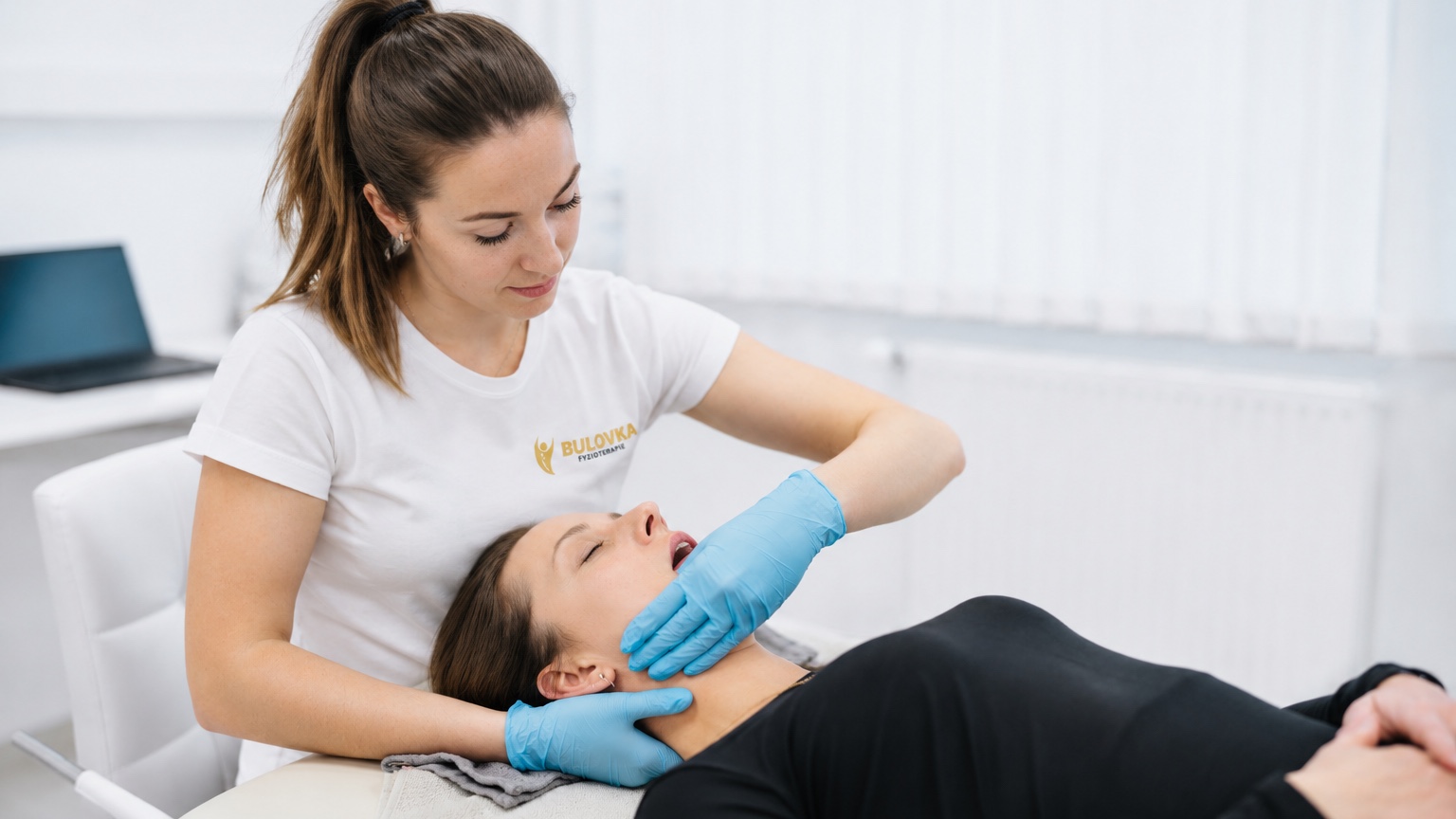
2. Examination of the jaw joint and chewing muscles
This is followed by a functional examination, during which the physiotherapist assesses the mobility of the jaw, the way the mouth opens and closes, any asymmetries, and muscle tension.
If necessary, the cervical spine, head posture, and related muscle groups may also be examined.
The examination may include gentle palpation of the chewing muscles and other structures in the jaw area.
3. Individual physiotherapeutic care
Based on the examination results, the physiotherapist will propose a suitable course of action.
Depending on the nature of the difficulties, therapy may include:
Manual techniques focused on overloaded chewing muscles and surrounding soft tissues.
Exercises to improve jaw mobility and coordination of its movements.
Work with the cervical spine, if the examination reveals related functional difficulties.
Relaxation and breathing techniques for better awareness of muscle tension.
Adjustment of movement habits and the everyday strain placed on the jaw.
Selected techniques may also be performed inside the oral cavity, if professionally appropriate. The physiotherapist will always explain their purpose and procedure in advance, and will proceed only with the patient's consent.
4. Home exercises and recommendations
Physiotherapy also typically includes education and practice of suitable exercises for the home environment.
The physiotherapist will explain how to properly work with jaw movement, how to recognize excessive muscle tension, and which habits may worsen the difficulties.
Specific exercises are always chosen individually. Overly intensive stretching or repeatedly opening the mouth through pain may not be advisable.
What can you do for your jaw joint yourself?
Caring for the jaw joint can also include simple lifestyle measures that help reduce excessive strain on the chewing muscles.
Depending on the nature of the problems, it may be helpful to:
Pay attention to teeth clenching during the day. Apart from chewing and swallowing, the teeth should usually not be held tightly together.
Limit excessive chewing. If there is pain, it may be advisable to temporarily avoid chewing gum or very hard foods.
Avoid overloading the jaw when opening the mouth. Avoid unnecessarily wide opening if it causes pain.
Take regular breaks during work. Prolonged work-related tension may be associated with increased jaw clenching.
Pay attention to relaxation. For some patients, working with stress, breathing, or overall muscle tension can help.
If the problems are significant, long-lasting, or worsening, a professional examination is advisable rather than experimenting with exercises on your own.
When to see a dentist or other specialist?
Physiotherapy can be an important part of conservative care for the jaw joint, but not all problems have a purely muscular or functional cause.
A dental examination is advisable especially in the case of:
Significant or long-term jaw joint pain.
Repeated locking or significant limitation of mouth opening.
Tooth damage caused by grinding or clenching.
Changes in the bite or other dental issues.
Problems that do not improve despite appropriate lifestyle measures.
If sudden jaw locking, significant swelling, fever, difficulty swallowing, or problems after an injury occur, it is important not to delay a medical examination.
In cases of recurring severe headaches, hearing disorders, or significant tinnitus, a neurological or ENT examination may also be advisable.
Jaw joint physiotherapy and cooperation with dentistry
For some jaw joint problems, it is advisable to combine physiotherapy care with a dental examination.
The physiotherapist focuses primarily on the function of the chewing muscles, jaw mobility, and related movement-related problems.
The dentist can assess the condition of the teeth, the bite, any consequences of bruxism, and other possible causes of the problems.
Depending on the individual situation, the dentist may recommend, for example, a protective dental splint. However, its suitability must be assessed by a dentist, and the splint alone does not replace other necessary care.
At Bulovka Premium Clinic in Pankrác, we provide both physiotherapy and dentistry at one facility. If needed, the individual specialties can therefore be appropriately combined according to the patient's specific health condition.
Why choose jaw joint physiotherapy in Pankrác?
At Bulovka Premium Clinic in Pankrác, we offer specialized jaw joint physiotherapy with an emphasis on individual examination and targeted therapy.
Mgr. Jakub Bezpalec also focuses on jaw joint issues at our clinic, specializing in comprehensive musculoskeletal care, manual therapy, and functional disorders of the temporomandibular joint.
What can you expect from us?
Specialized examination – focused on the jaw joint, chewing muscles, and related movement functions.
Individual approach – therapeutic procedure based on examination results and the nature of the problems.
Manual techniques and targeted exercises – a combination of suitable procedures to support the function of the chewing apparatus.
Option of follow-up dental care – dentistry is available at the same clinic.
Booking without a referral – you can book a physiotherapy appointment directly online.
Good transport accessibility – the clinic is located in the Gemini A building near the Pankrác metro station.
We provide physiotherapy on a direct payment basis. We do not have contracts with health insurance companies for this service.
You can find details about our services on the Bulovka Premium Clinic physiotherapy page.
Frequently Asked Questions About Jaw Joint Physiotherapy
Does physiotherapy help with jaw clicking?
Physiotherapy can help with certain functional issues of the jaw joint, especially when they are associated with pain, muscle tension, or restricted movement. However, painless clicking on its own may not require treatment.
Is physiotherapy suitable for teeth grinding?
Physiotherapy can help address increased tension in the chewing muscles and related functional problems. However, in the case of bruxism, a dental examination is also advisable, especially if tooth wear is present.
Can headaches be related to the jaw joint?
Yes, some headaches can be related to disorders of the chewing muscles and jaw joint. However, not every headache has this cause. In case of recurring or significant difficulties, a medical examination is recommended.
What does the first visit involve?
The first visit includes an initial consultation, an examination of jaw mobility, the chewing muscles, and possibly the cervical spine as well. Depending on the results, this may be followed by the first part of therapy and recommendations for home exercises.
Is jaw joint physiotherapy painful?
Some manual techniques or examination procedures may be uncomfortable in cases of increased sensitivity. However, the physiotherapist adapts the approach to the current condition and explains each step along the way.
How many visits will I need?
The number of visits depends on the nature and duration of the difficulties, the results of the examination, and the response to therapy. The physiotherapist will recommend further steps individually.
Do I need a referral from a doctor?
No. You can book jaw joint physiotherapy at Bulovka Premium Clinic without a referral. If you have a medical or dental report, we recommend bringing it with you.
Is jaw joint physiotherapy covered by health insurance?
At Bulovka Premium Clinic, we provide physiotherapy on a direct payment basis. We do not have contracts with health insurance companies for this type of care.
Book your jaw joint physiotherapy appointment in Pankrác
Jaw pain, excessive tension in the chewing muscles, or limited mouth opening can unpleasantly affect everyday life.
Jaw joint physiotherapy can be a suitable part of care for functional problems of the masticatory system. An important first step is a professional examination, which helps identify the possible cause of the problems and recommend further treatment.
At Bulovka Premium Clinic in Pankrác, we offer individual physiotherapy care focused on the jaw joint, chewing muscles, and related areas of the musculoskeletal system.
You can find us in the Gemini A building, Na Pankráci 1683/127, Prague 4, close to the Pankrác metro station.
Book conveniently online and choose a time that suits you.
More information and online booking for jaw joint physiotherapy