Custom Formthotics Orthopedic Insoles in Prague
Our feet carry us every day – while walking, at work, and during sport. Their condition and the way they are loaded can affect not only comfort during movement but also the function of other parts of the musculoskeletal system.
If you experience heel pain, foot fatigue, or discomfort during longer walks, a professional examination may be advisable. One possible follow-up treatment option is individually shaped Formthotics orthopedic insoles, which provide support to the feet and can help adjust load distribution.
At Bulovka Premium Clinic in Pankrác, we offer foot examinations and the custom fitting of New Zealand–made Formthotics insoles. Thanks to the special thermoplastic material, the insoles can be heated and shaped directly to the foot during a single visit.
In this article, we explain how Formthotics work, who may benefit from them, how the fitting process works, and how they differ from standard shoe insoles.
What are Formthotics orthopedic insoles?
Formthotics are individually adjustable orthopedic insoles developed in New Zealand. They are made from a special lightweight polyethylene foam called Formax, which allows their shape to be adjusted using heat.
Unlike standard, one-size-fits-all insoles, Formthotics can be adapted to a specific foot and shoe. Once heated, the material softens and, through professional shaping, conforms to the individual anatomical proportions of the foot.
The insoles combine foot support, flexibility, and load cushioning. Their specific properties depend on the chosen model, stiffness, and subsequent adjustment.
The goal is to provide appropriate support to the foot during standing, walking, or sports activity, and to help adjust pressure distribution within the shoe as needed.
How does the thermoplastic technology work?
The insoles are made from a material that allows its shape to be changed through controlled heating. The physiotherapist selects a suitable model and then adjusts it based on the examination results.
Once placed in the shoe, the insoles take shape according to the feet. During further use, they may gradually continue to adapt to the way they are loaded.
The advantage is the possibility of individual adjustment without having to wait a long time for the production of an entirely new product.
However, shaping the insoles alone does not guarantee the elimination of health issues. A proper examination, correct insole selection, and possible combination with further physiotherapy care are essential.
What issues can Formthotics insoles help with?
Orthopedic insoles can be part of conservative care for various foot and lower limb issues. Their suitability always depends on the specific cause of the problem.
1. Foot and heel pain
Heel pain is one of the common reasons people seek professional care. It may occur, for example, during the first steps in the morning, after prolonged standing, or during sports activity.
One possible cause is plantar fasciopathy, which is related to overloading of the connective tissue structure on the underside of the foot. Heel pain may also be associated with a heel spur, although this finding alone may not necessarily be the source of the discomfort.
Appropriately selected insoles can help adjust foot loading, provide support to the arch, and reduce pressure on sensitive areas.
In the case of plantar fasciopathy, insoles are usually most effective as part of a broader treatment plan, for example in combination with targeted exercise and load adjustment.
2. Flat feet and changes in foot alignment
A lower longitudinal arch, increased loading of certain parts of the foot, or a different gait pattern may, in some people, be associated with pain and fatigue during movement.
Formthotics orthopedic insoles allow individual adjustment of foot support and, as needed, can help influence pressure distribution.
However, flat feet alone do not necessarily indicate a health problem. If they do not cause pain or functional limitation, the use of orthopedic insoles may not be necessary.
For this reason, the physiotherapist assesses not only the appearance of the arch but also foot function during standing and movement.
3. Knee, hip, and lower back pain
The foot is an important part of the lower limb movement chain. Its loading and movement pattern can be related to the function of the ankles, knees, and hip joints.
For certain issues, it may be appropriate to assess whether gait pattern or foot load distribution contributes to their onset or persistence.
In certain cases, custom insoles may be part of comprehensive physiotherapy care.
However, knee, hip, or back pain can have many different causes. Insoles should therefore not be considered a universal solution to these problems.
4. Sports-related overload
During running, hiking, or indoor sports, the feet are repeatedly subjected to load. The demands placed on their function vary depending on the type of movement, footwear, and training intensity.
Formthotics may be suitable for some athletes who need individual foot support or adjustment of load distribution within their shoes.
When selecting insoles, the physiotherapist takes into account factors such as:
The type of sports activity and training frequency.
The characteristics of the sports footwear used.
The gait pattern and foot function.
Current pain or recurring overload.
Individual need for stability and cushioning.
Insoles can complement targeted exercise, suitable footwear, and adjustments to training load. However, their use cannot guarantee prevention of all sports injuries.
5. Foot fatigue from prolonged standing and walking
Long work shifts spent standing, regular walking, or unsuitable footwear can contribute to foot fatigue and discomfort.
Individually fitted insoles may offer some people more comfortable support and help adjust foot loading throughout the day.
However, it is also important to assess the footwear itself, working conditions, and other possible causes of the discomfort.
If significant swelling of the feet, changes in skin colour or unusual pain occur, a medical examination is advisable. Insoles do not replace the diagnosis of vascular or other conditions.
6. Stability and Coordination While Walking
In some cases, insoles can help adjust the contact between the foot and footwear and influence the load placed on it during movement.
This can be beneficial, for example, for individuals in whom a physiotherapist identifies specific functional issues related to foot alignment or stability.
However, orthopaedic insoles cannot reliably prevent all foot deformities. For instance, in the case of a bunion or hammer toes, they may in some cases be used to relieve pressure or discomfort, but their ability to prevent the development of a structural deformity has not been sufficiently proven.
How Are Custom-Made Formthotics Insoles Produced?
One of the main advantages of Formthotics technology is the ability to adjust the insoles directly during a visit to the clinic.
At Bulovka Premium Clinic in Pankrác, the process includes a professional assessment of the feet, selection of a suitable model and its individual shaping.
1. Initial Consultation and Foot Examination
The physiotherapist first discusses your difficulties, movement habits and the way your feet are loaded.
They are interested, for example, in which activities trigger pain, what footwear you most often wear, or whether you exercise regularly.
They then assess the alignment and function of the feet while standing and, if necessary, while walking.
2. Podoscope Examination
A comprehensive examination may also include a podoscope, which allows assessment of the contact between the foot and the surface, pressure points and load distribution while standing.
The results help the physiotherapist better understand how the feet are loaded and choose the appropriate insole setup.
A podoscope examination is one part of the diagnostic process and does not, on its own, determine the cause of all movement-related issues.
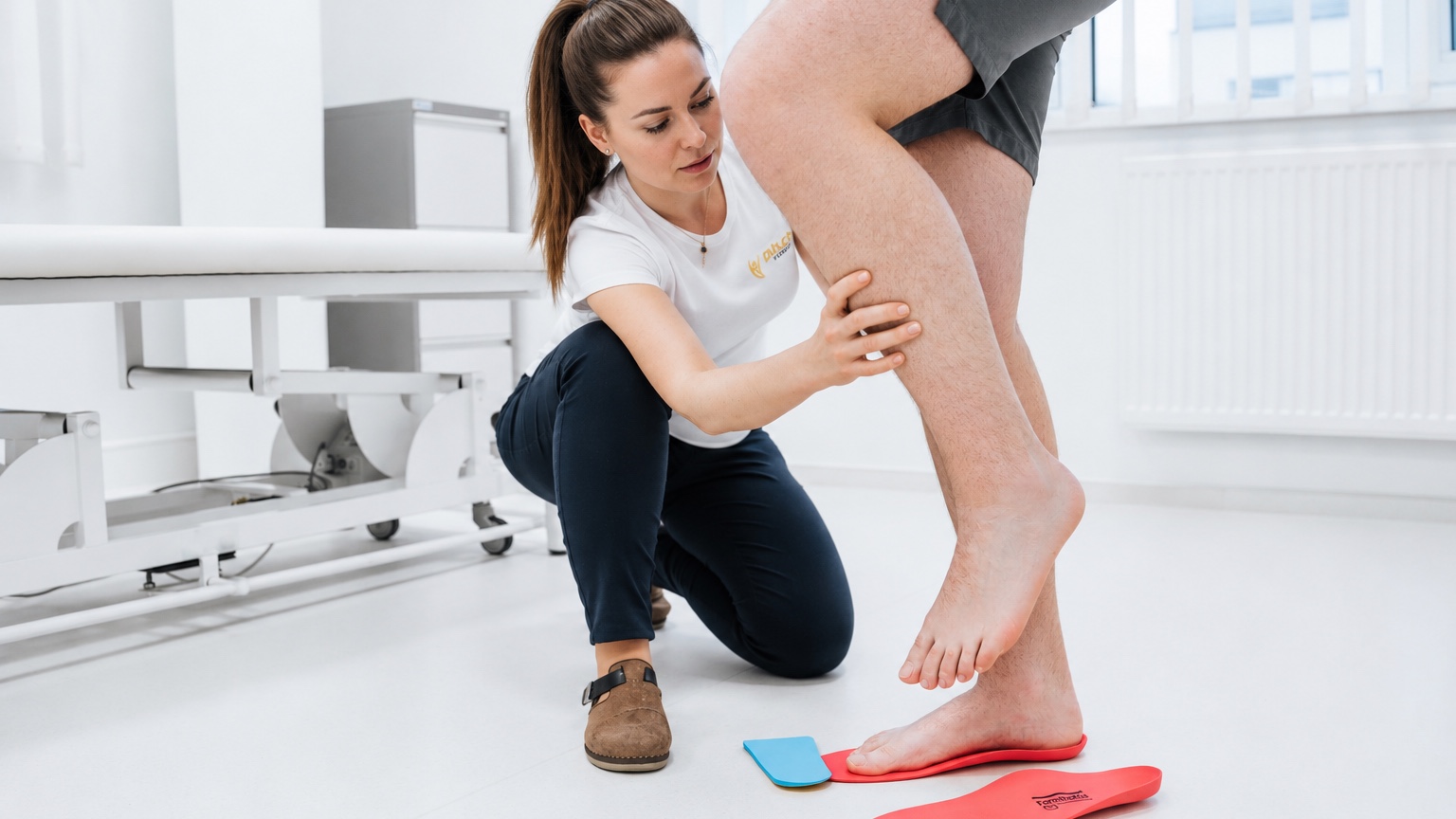
3. Selection and Heat Moulding of the Insoles
Based on the examination, the physiotherapist selects the appropriate type of Formthotics insoles.
The insoles are heated in a special device, which makes the material mouldable. They are then placed into the prepared footwear and shaped according to the form and alignment of the feet.
Depending on the specific model and the client's needs, further adjustments may also be made.
4. Comfort Check and Any Necessary Adjustments
After shaping, the fit of the insoles in the footwear and their comfort while standing or walking are checked.
The physiotherapist assesses whether the insoles cause any pressure, whether they provide adequate support, and whether they work well with the specific footwear.
This means you can leave the clinic with individually adjusted insoles after just a single visit. However, a follow-up check or adjustment of their fit may be advisable if needed.
How to Properly Get Used to Orthopaedic Insoles
Although Formthotics can be moulded during a single visit, the feet may need some time to get used to wearing them.
New support can change the perception of foot loading and contact with footwear. Therefore, it is generally recommended to gradually extend the wearing time according to individual tolerance.
In the first few days, you should pay particular attention to:
Whether the insoles cause any unpleasant pressure or chafing.
How your feet feel during longer periods of walking.
Whether there is enough room for your toes in the footwear.
Whether any new or worsening pain appears.
If the insoles cause significant pressure or persistent discomfort, their use should be discontinued and a follow-up appointment should be arranged.
Well-fitted orthopaedic insoles should match individual needs and be comfortable to wear.
Why combine orthopaedic insoles with physiotherapy?
An insole alone is not always a sufficient solution for movement-related problems. If, for example, pain is also linked to muscle overload, restricted mobility or incorrectly dosed sporting activity, it may be advisable to address these areas as well.
That is why at Bulovka Premium Clinic we take a comprehensive approach to foot care.
Based on the examination results, a physiotherapist may recommend:
Individual exercises for the muscles of the foot and lower limbs.
Work on the mobility of the ankles and other joints.
Coordination and stabilisation exercises.
Adjustment of sporting or work-related load.
Selection of suitable footwear and lifestyle recommendations.
The advantage lies in combining individually shaped insoles with a professional examination and active physiotherapeutic care.
Why choose Formthotics insoles at Bulovka Premium Clinic?
At our clinic in Pankrác, we offer an individual approach to foot examination and the professional fitting of orthopaedic insoles.
Made during a single visit
Thanks to thermoplastic technology, the insoles can be heated and shaped directly on site. There is no need to wait for them to be made in an external laboratory.
Professional physiotherapeutic examination
The selection of insoles is based on an assessment of foot function, specific complaints and movement habits.
If needed, a podoscopic examination can also be used, and further physiotherapeutic care may be recommended.
Individual adjustment according to activity
The insoles can be selected and adapted with regard to everyday walking, work footwear or a specific sporting activity.
Compatibility with the footwear being used is also always important.
Booking without a referral
You can book an examination directly, without a referral from a general practitioner or orthopaedist.
We provide physiotherapeutic and podiatric care on a direct-payment basis. We do not have contracts with health insurance companies for these services.
Convenient location in Prague 4
You will find the clinic in the Gemini A building, Na Pankráci 1683/127, Prague 4, close to the Pankrác metro station (Line C).
Information on the prices of examinations, insoles and any follow-up check-ups can be found in our current price list.
Frequently asked questions about Formthotics orthopaedic insoles
How long does it take to make Formthotics insoles?
The insoles are selected and heat-shaped directly at the clinic. They can be fitted during a single visit, which also includes the necessary professional assessment.
Are Formthotics insoles suitable for runners?
They may be suitable for some runners and other athletes, especially if the examination identifies a need for individual foot support. Their selection depends on the type of sport, footwear and any existing complaints.
Can insoles help with heel spurs?
Individually selected insoles can be part of conservative care for certain types of heel pain, such as plantar fasciopathy. They are most often recommended in combination with other therapeutic approaches. They do not remove the bony spur itself.
Are Formthotics better than regular shoe insoles?
Their advantage lies in the possibility of thermal shaping and individual fitting. However, this does not mean they will be more effective for everyone than other quality insoles. The suitable type depends on individual needs and health condition.
Can I use the same insoles in multiple pairs of shoes?
In some cases, yes, provided the shoes have a similar shape and sufficient space. However, significantly different footwear may require a different setup or a separate pair of insoles.
Is a follow-up check-up necessary after the insoles are made?
A check-up is not always essential. However, if pressure, discomfort or persistent problems occur, the physiotherapist may recommend adjusting the insoles or further examination.
Do I need a referral from an orthopaedist?
No. You can book a foot examination and have Formthotics insoles made at Bulovka Premium Clinic without a referral. If you have available orthopaedic or other medical reports, we recommend bringing them along.
Are orthopaedic insoles covered by health insurance?
At Bulovka Premium Clinic, we provide this care on a direct-payment basis. Any individual contributions from health insurance companies must be verified directly with the relevant insurer.
Book an Appointment for Formthotics Insoles in Pankrác
Foot pain, uncomfortable heel strain or tired legs can have a variety of causes. Individually shaped orthopedic insoles may be one option to support foot function and improve comfort during everyday movement.
At Bulovka Premium Clinic in Pankrác, we offer professional examination and custom fabrication of New Zealand Formthotics insoles directly during your visit.
Thanks to our connection with physiotherapy, we can also assess your feet in relation to the entire musculoskeletal system and recommend suitable supplementary exercises or adjustments to weight distribution.
Book conveniently online and find out whether Formthotics insoles are the right choice for you.