5 tips to get rid of the pain
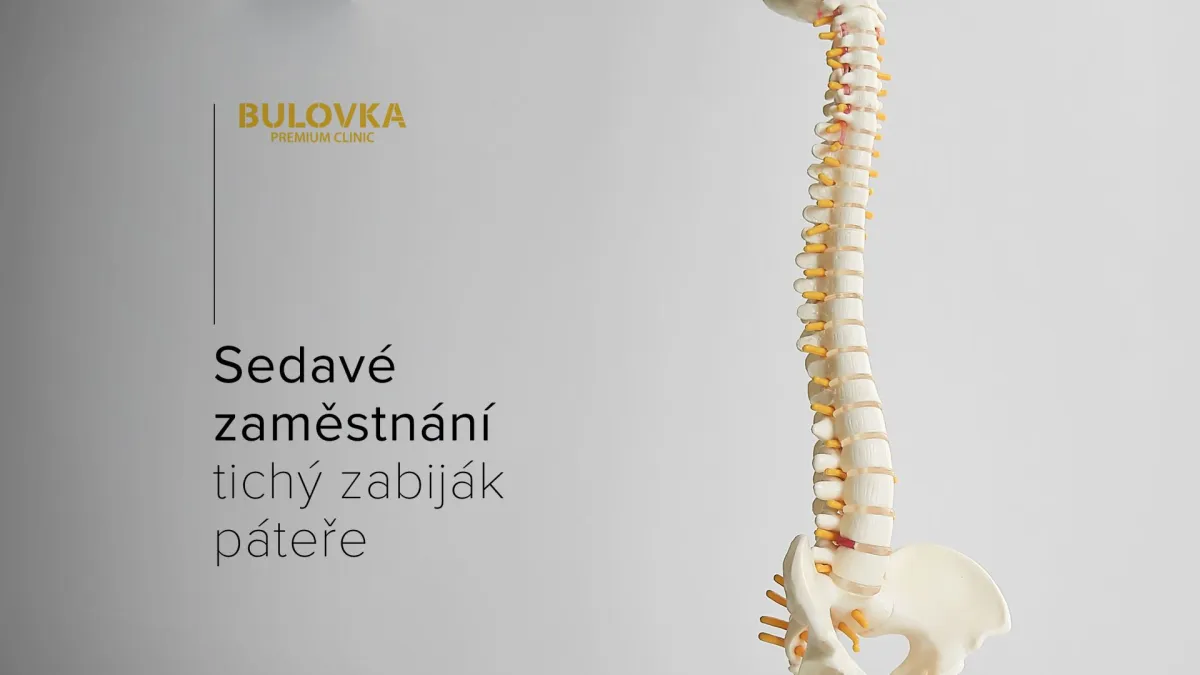
Do you spend more than eight hours a day in the office, with your computer monitor as your most faithful companion? Perhaps you already feel a stiff neck, pain in your lower back, or tingling in your fingers. Sedentary work is a modern lifestyle problem that takes its toll. Doctors and physiotherapists often call prolonged sitting „the new smoking“ or the silent killer of the spine.
At Bulovka Premium Clinic, we know that changing your profession isn't always possible. But you can change the way you work. Read on to learn how to reduce the effects of static strain and prevent serious health complications.
Why does sitting hurt us so much?
The human body is made for movement, not for a static position. Prolonged sitting causes uneven loading of the intervertebral discs, which lose their elasticity. The muscles that are supposed to keep the spine upright (the deep stabilization system) weaken, while other muscle groups (e.g. the hip flexors or chest muscles) shorten.
The result is muscle imbalances, which can lead, for example, to chronic pain in the cervical spine, pain in the shoulder joints, or back pain.
How to survive in the office without pain?
You don't have to run a marathon right away. Often, small adjustments to your work environment and habits are enough to bring great relief.
1. Ergonomics is the foundation
Having an expensive chair isn't enough; you need to know how to sit in it. Proper workplace ergonomics looks like this:
- Monitor: The top edge of the screen should be at eye level. If you hunch over your laptop, get an external keyboard and a monitor stand, or use a stack of paper or some books.
- Elbows and knees: They should form a right angle (90°). Your feet must be flat on the floor.
- Lumbar support: Make sure the chair follows the natural curve of your spine.
2. The 45/15 rule
A static position is the body's greatest enemy. Try working in blocks. After every 45 minutes of work, stand up for 5 to 10 minutes. Go get a drink, take a phone call standing up, or walk down the hallway. This activates your blood circulation and „resets“ the tension in your back.
3. Exercise right in your chair
Feeling fatigue setting in? Try these simple exercises to relax the cervical spine:
- Tuck your chin back as if making a „double chin“. Stretch upward through the crown of your head. Release.
- As you exhale, tilt your head toward one shoulder (don't raise the shoulder to your ear), breathe through it, and switch sides.
- Brace your palm against the door frame and gently rotate your torso to the opposite side.
4. Compensate with movement
If you sit for 8 hours at work, an hour at the gym unfortunately won't save it. If you go to the gym, focus on compensatory exercises and consult your trainer/physiotherapist about suitable exercises. The most natural movement, however, is walking, so get off one stop early and walk to work or on your way home. Swimming, yoga, or Pilates, for example, are also suitable physical activities.
5. Don't underestimate the warning signs
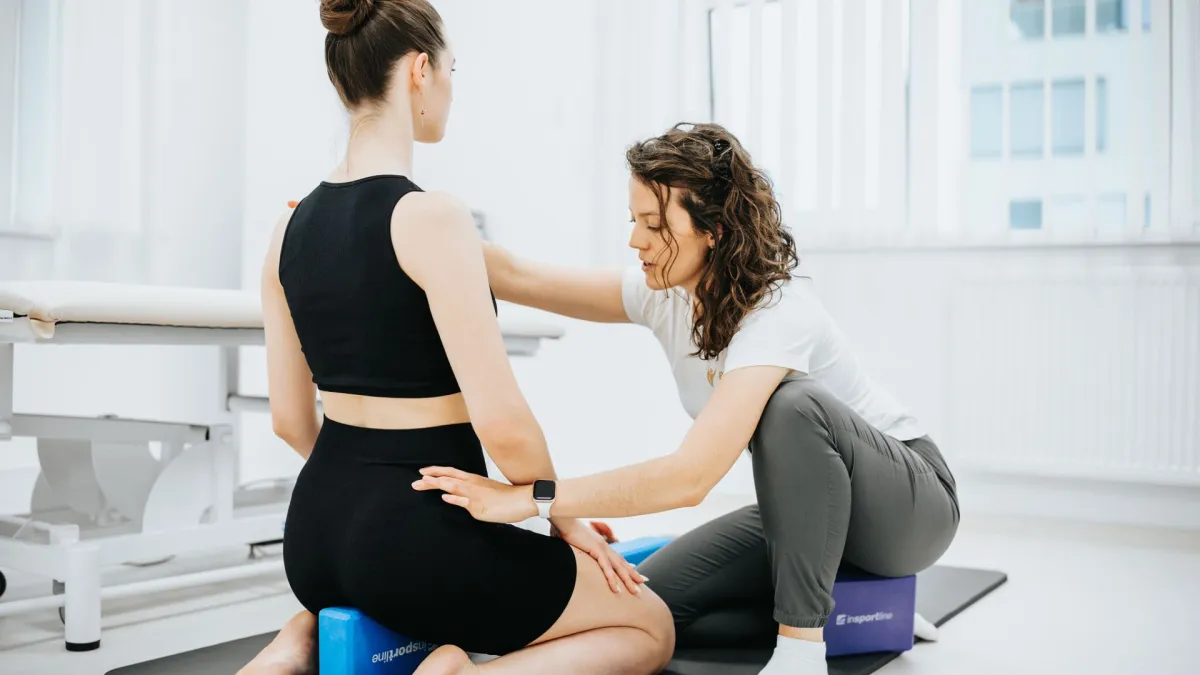
Don't wait until the pain accompanies you all day long. Visit our physiotherapists preventively, because even small adjustments to your everyday routines or a few exercises can change how you feel. If the pain keeps coming back permanently, radiates into your upper or lower limbs, and you have to take a painkiller or muscle relaxant, be sure to seek professional help.
The solution at Bulovka Premium Clinic
Don't let pain control your work and personal life. At Bulovka Premium Clinic, we take a comprehensive approach to treating back pain:
- Diagnostics: We perform a thorough examination of the musculoskeletal system.
- Tailored physiotherapy: We teach you the correct movement patterns and exercises designed specifically for your body.
Stop by and see us. Your spine will thank you.
A closing tip:
Try changing positions during working hours and take a walk around the office. If your workplace has height-adjustable desks, use them and work standing up for a few minutes. Instead of sitting on a chair, you can sit on an exercise ball, or get a balance cushion (which you can sit or even stand on).